
The real estate market across the world is evolving rapidly, driven by innovation and digital transformation. As a hub of smart infrastructure and futuristic city planning, it faces complex challenges that require custom software solutions powered by AI, data analytics, and automation.

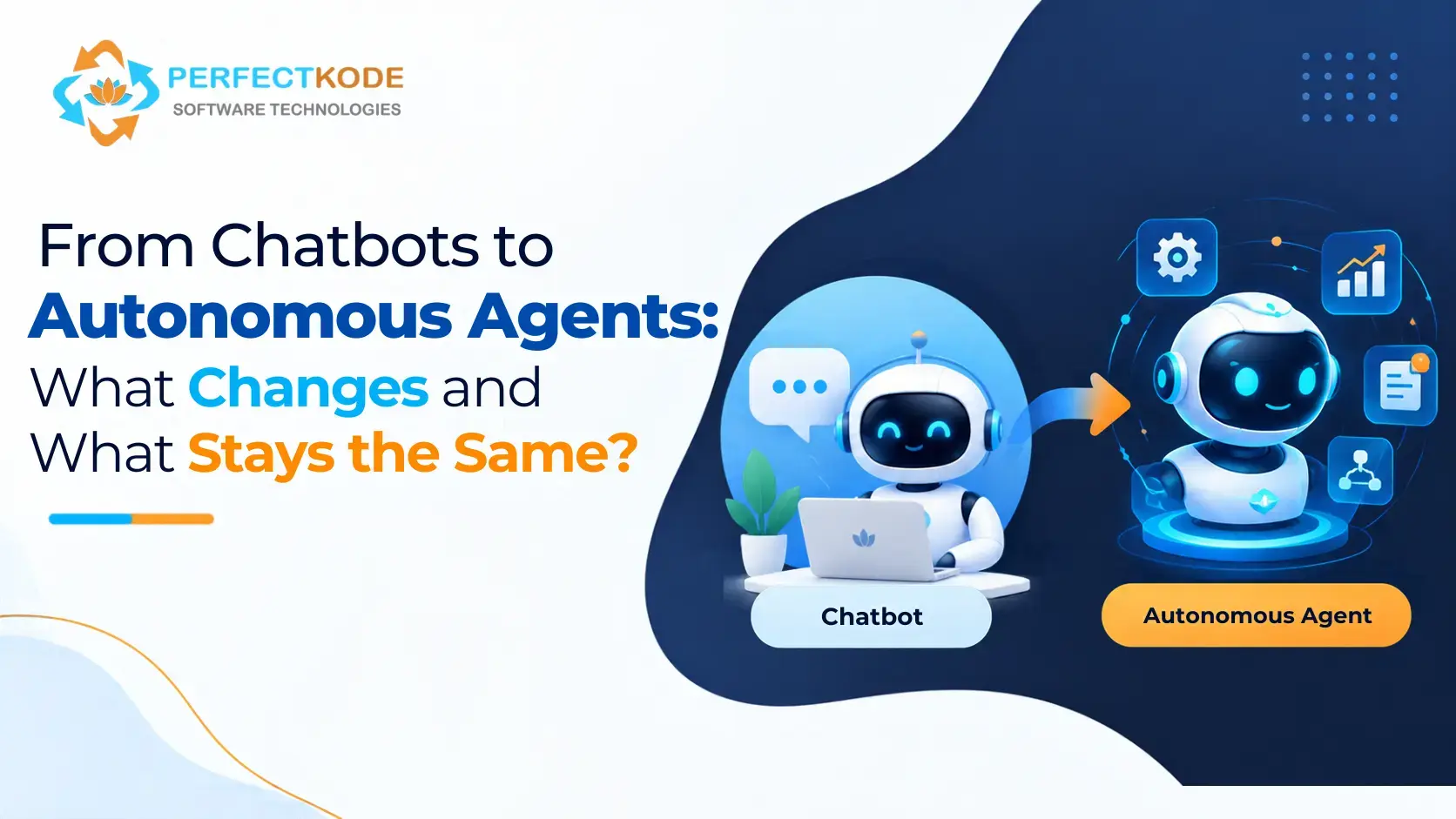
“So this is like a chatbot... but with intelligence, right?” This is one of the most common questions, I heard when discussing AI agents with business clients and developers. The truth? It’s not just about being smarter — it’s about being more capable, goal-driven, and independent.
In this article, I’ll break down the transition from traditional chatbots to modern autonomous AI agents — what changes, and why this shift matters for real-world businesses.
What Common?
Let’s start with some basic understanding. If you've built or used a chatbot before, you’ll find that AI agents share a few familiar traits:
- Natural Language Interface - Both chatbots and AI agents communicate in plain language. Whether answering questions, generating responses, or offering help — they're still conversational first.
- Prompt-Based Interaction - AI agents, like chatbots, are driven by prompts. Whether it is user messages or system instructions, both of them relying heavily on well-structured input to behave intelligently.
- Task-Bound Design - Many chatbots are designed to do one thing well (e.g., “book a ticket”, “show FAQs”). Some early AI agents also created as narrow-task specialists.
What Changes?
Here's where things get exciting — and a little more complex.
From Scripts to Autonomy - Chatbots follow scripts or trees. Agents set goals and figure out how to achieve them. For example:
- A chatbot might answer “What’s the status of my refund?”
- An agent might track the order, fetch logs, check refund policies, and send you a summary — on its own.
From Reactions to Actions - Chatbots wait. Agents act. AI agents can:
- Call external tools (e.g., APIs, CRMs, spreadsheets)
- Use reasoning chains like ReAct, Tree of Thought, or Toolformer
- Even decide not to act until enough context is gathered
This shift from conversational responders to task executors is the core leap.
From Stateless to Stateful - Chatbots often forget and did not save any messages or responses. On the other hand, Agents remembers not just in a single chat but across messages. AI agents use:
- Short-term memory (conversation context)
- Long-term memory (previous results, reflections, preferences)
- Vector stores, RAG (Retrieval Augmented Generation), or episodic logs to learn continuously
From Hardcoded Flows to Dynamic Planning - Chatbots works on decision tree and follow “if this, then that.” Agents plan, reflect, retry, and adjust. For example:
A support agent could try 3 different escalation paths automatically, choosing the most successful one based on live feedback.
What It Means for Businesses
Let me explain this with some businesses like E-Commerce, Fintech, HR, or SaaS, here’s what this evolution unlocks:
- Higher ROI - AI agents can complete workflows that reduce manual effort, speed up resolutions, and learn from each run.
- Better Customer Experience - Agents don’t get stuck in rigid menus or pre-defined conditions. They adapt, escalate, and take initiative, just like a good support rep who can think.
- Human + AI Collaboration - Agents can handle the grind. Humans focus on edge cases, creativity, and judgment. Win-win.
What It Means for Developers
If you're a developer and wants to stepping into this space, here’s your new checklist

You’ll work with:
- LLMs (GPT-4o, Claude, Mistral)
- Frameworks: LangGraph, AutoGen, CrewAI
- Memory stores: Pinecone, Weaviate, Chroma
- Multi-agent systems for complex tasks
🌟 Final Thought
Not every problem needs an AI agent. But when the job involves multi-step reasoning, tool usage, or goal execution— agents aren’t just better than chatbots...
#PerfectKode #ArtificialIntelligence #AIAgents #Langchain #AgenticAI #GPT4 #OpenAI #FutureOfWork #TechInnovation